Loading
Behind the scenes
Building an animated world one reusable piece at a time
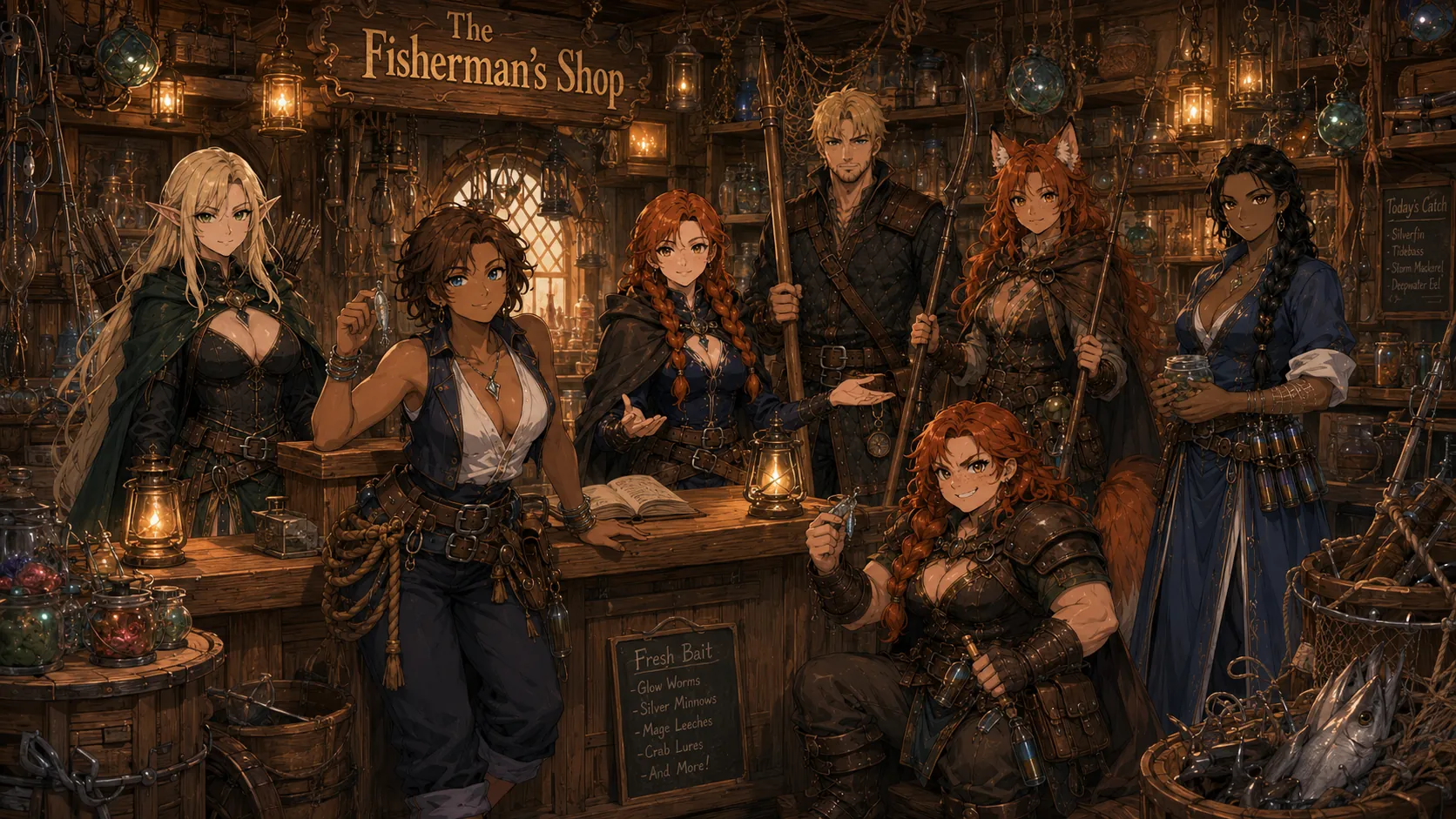
The Fisherman’s Shop is being designed for efficient episodic production through an asset-first, AI-assisted workflow. The goal is not random generation. It is a controlled production system that can preserve characters, locations and story continuity across hundreds of episodes.
Production workflow
From an episode idea to a finished release
01
Canon and episode planning
Every idea begins against the shared series bible: timeline, character behavior, relationships, locations, tone and what the audience should understand without reading the novels.
02
Script and scene breakdown
The script is divided into purposeful scenes, shots, speaking beats, props and environment requirements before image or animation generation begins.
03
Prompt engineering
Each shot receives a robust prompt assembled from locked character, environment, camera, lighting, continuity and negative constraints rather than a loose one-line description.
04
Reusable asset production
Character turnarounds, expressions, outfits, props and environment angles are created as reusable packs so future episodes become more consistent and less expensive.
05
Animation and assembly
Approved assets move through animation, voice, sound, music, editing, captions and platform-specific reframing for shorts or longer episodes.
06
Human review and continuity
Nothing is finished merely because a tool produced it. Shots are reviewed for character identity, anatomy, visual drift, storytelling, pacing, audio and franchise canon.
Why asset packs matter
Consistency is built before animation begins
The shop, upstairs rooms, surrounding grounds, cast outfits and recurring props are treated as production assets—not disposable images.
A recurring series becomes believable when viewers always recognize the same doorway, counter, staircase and face. That requires clean references from multiple angles, locked proportions, named variants and a review process that rejects drift.
Strong prompt engineering also reduces cost. A scene engine can combine approved canon, the script beat, camera direction, environment details and character states into precise prompts, reducing failed generations and avoiding repeated guesswork.
The long-term vision is a production operating system capable of planning episodes, assembling prompts, routing work through specialized tools and presenting every shot for final human approval before publication.
Follow the build
Watch the world grow before the first season
Character spotlights, environment showcases, animation tests and production updates will become part of the public project—not hidden scraps.